
Last updated November 18, 2026







Free written scope consultation - allowances, timeline, and change-order rules on paper before a single trade is scheduled
Construction Warning Signs: A Lake Forest Homeowner’s Reference Guide
A hairline stucco crack running diagonally from a window corner is not cosmetic. In Lake Forest’s construction era, that pattern is one of the specific indicators of the wire lath corrosion that precedes widespread stucco delamination. The crack itself is cheap to investigate. The delamination it points to is not. Most of what we get called out to look at in Lake Forest started as a sign the homeowner walked past for three or four years. This guide teaches you to read those signs early, organized by system: stucco, flatwork, roofing, the interior clues that point back outside, and the HOA clock that starts ticking the moment your exterior starts to go.
Quick Answer
The construction warning signs most worth acting on in Lake Forest are diagonal stucco cracks radiating from window and door corners (lath corrosion, not settling), driveway cracks that have widened or dropped on one side (subbase failure, not shrinkage), granule loss and lifted ridge caps on composition roofs, and interior efflorescence or baseboard staining that points to a water path coming from outside. Any of these is worth a professional look now, because each one is far cheaper to correct at the warning stage than after the system fails.
Styles & brands we work with
- Kitchen remodeling
- Bathroom remodeling
- Home additions & ADU
- Roofing
- Windows & doors
- Driveway & pavers
- Fence
Table of Contents
- Stucco Warning Signs: Reading the Crack Pattern
- Driveway and Flatwork: Shrinkage Cracks vs. Subbase Failure
- Roofing Indicators on Concrete Tile and Composition Shingle
- Interior Signs of Exterior Failure Homeowners Mistake for Plumbing
- HOA Violation Risk and the Cure Timeline
- Windows, Doors, and the Envelope Gaps Around Them
- How to Tell a Warning Sign From a Cosmetic Blemish
Stucco Warning Signs: Reading the Crack Pattern
Stucco on Lake Forest homes from the 1990s and 2000s was applied over wire lath and a paper moisture barrier, and the failure mode is almost always the same: moisture gets behind the stucco, the wire lath begins to corrode, the corrosion expands, and the stucco coat loses its mechanical grip on the wall. The visible result starts as a crack and ends as a hollow-sounding sheet of stucco that can delaminate in whole sections.
The crack pattern tells you which stage you’re in. Here’s how to read it:
- Diagonal cracks at window and door corners. These radiate at roughly 45 degrees from the corner of an opening. In our experience this is the wire lath corrosion pattern showing itself, because the corner is where stress concentrates and where the lath is most likely to have been cut short during installation.
- Hairline map cracking across a broad field. Fine, web-like cracking across a large flat area is often surface shrinkage in the stucco coat. Worth watching, less urgent than a corner crack.
- Horizontal cracks along a floor line or band. These often track a framing change or a control joint that wasn’t installed. They can be cosmetic, but they can also signal a moisture path at the flashing behind them.
- Rust staining below a crack. This is the one to act on immediately. Rust weeping from a stucco crack means the lath itself is corroding, and the delamination is already underway behind the surface.
The confirm test is a tap. A soft, hollow sound when you tap the stucco with a screwdriver handle or similar, compared to the solid ring of sound stucco, means the coat has separated from the substrate. In Lake Forest’s dry climate the surface can look intact for a long stretch while the back of the assembly is quietly failing, which is why we recommend an inspection rather than a visual judgment when you see the corner pattern.
This is also where the repair-versus-replace decision gets made. Patching a corner crack without addressing the lath behind it usually just moves the crack six inches. A proper repair means opening the stucco, assessing the lath and moisture barrier, repairing what’s failed, and re-coating with a matched system. If the inspection finds the wider wall has gone hollow, that’s a different conversation. Our Construction Lake Forest team handles both, and the free estimate will tell you which side of that line you’re on.
Driveway and Flatwork: Shrinkage Cracks vs. Subbase Failure
Every concrete driveway in Lake Forest cracks eventually, and the important question is whether the crack is in the concrete or under it. Shrinkage cracks are normal. Subbase failure is structural. They look similar on the surface and behave very differently over the next few years.
Use this test sequence to tell them apart:
- Check the width. A true shrinkage crack stays narrow, often under the width of a coin, and isn’t growing noticeably year over year. A subbase crack widens as the slab continues to settle unevenly.
- Look for a height change (offset). Run your hand or a straightedge across the crack. If one side has dropped relative to the other, the slab is moving, not just shrinking.
- Check for mud pumping or gaps at the edge. If you can see the concrete is no longer seated on the soil beneath it, or fine soil has worked up through the crack, the subbase has washed out or was never compacted properly.
- Watch the pattern. Shrinkage cracks tend to radiate in fairly random directions. Cracks that form a line following a seam, or that run parallel to the drive in a long continuous path, usually follow a subbase failure or a control joint issue.
- Check the drain line. Water that ponds against the driveway instead of running off is the single biggest aggravating factor for any flatwork. If the fall of the slab has been lost, the subbase is being worked by water every rainy season.
In Lake Forest’s Orange County climate, the dry season does most of the slow damage to subbase: soil shrinks, the slab loses uniform support, and the next wet season finds the weak spot. If your driveway has an offset crack wider than about the width of a pencil, or a section that has dropped more than an inch, it’s worth a professional look. A crack that’s stayed narrow and level for years is likely a shrinkage crack you can seal and monitor.
When the driveway is at the end of its life, replacement and overlay options open up, and that’s where the material choice matters as much as the concrete pour. Our driveway & pavers work is built on designer-grade pavers from brands like Belgard, Techo-Bloc, Unilock and Tremron, which gives you a repair path, a resurface path, or a full replacement path instead of one option by default.
Roofing Indicators on Concrete Tile and Composition Shingle
Lake Forest’s roof stock is dominated by concrete tile on the older tracts and composition shingle on the newer ones and on many re-roofs. The warning signs differ by roof type, and so does the timeline for acting on them.
Composition shingle
- Granule loss pattern. Granules in the gutters are normal to a point. When you can see bare asphalt patches in the field, or the granules collect in a line at the bottom of a slope, the shingle has reached the end of its useful surface life. Uniform loss across the whole roof says replace; loss concentrated on one slope usually says that slope gets the weather.
- Curling or lifted tabs. Individual lifted tabs can sometimes be repaired. Cupping across a whole field means the mat has aged out.
- Ridge cap movement. Ridge caps that have lifted or shifted are a wind and water entry point right at the top of the roof. We see this on Lake Forest roofs after seasonal wind events, and it’s worth fixing before the next rain regardless of roof age.
- Fascia staining. Dark streaking on the fascia board below the roof edge is often the first visible sign that water is getting past the shingle and saturating the decking. It’s a warning sign, not a cosmetic stain.
Concrete tile
- Tile shift and slip. Tiles that have slid or opened gaps expose the underlayment, and the underlayment is what actually keeps water out on a tile roof.
- Valley debris and staining. Concrete tile traps debris in the valleys, and that trapped moisture ages the underlayment faster than the field.
- Underlayment age. A tile roof’s real lifespan often ends at the underlayment, not the tile. When the tile still looks fine but you’re getting attic moisture or interior ceiling staining, the underlayment is the suspect.
Our roofing work uses GAF, CertainTeed and Owens Corning systems, and the material decision comes down to what the existing roof is doing and what the next 25 years look like. If you’re seeing any of the patterns above, an inspection is the right first step. Freshening the roof now is also the natural time to handle the envelope items underneath it, and our home additions & ADU team coordinates that scope with the roofing work so you’re not scheduling two contractors on the same wall.
Interior Signs of Exterior Failure Homeowners Mistake for Plumbing
Three interior patterns in Lake Forest homes get misattributed to plumbing almost every time, and all three usually point to a leak path coming from outside. Getting this right matters because the plumbing fix doesn’t solve the actual problem.
- Efflorescence on an interior wall. That white, chalky crust along the bottom of a wall in a garage or at a baseboard is salt left behind as water evaporates out of masonry or drywall. It’s a moisture marker, and it usually means water is entering from outside the wall, not from a pipe inside it. Efflorescence is cosmetic on its own; the water path that caused it is not.
- Baseboard staining or swelling. A dark water line at the baseboard, or baseboard that has swelled and separated from the wall, is a classic sign that water is wicking up from the floor-wall joint. Run a hand along the baseboard after heavy rain and compare against a dry week. If the pattern follows weather, it’s exterior. If it’s constant, plumbing is more likely.
- Drywall bubbling or blistering on an exterior wall. Bubbled paint or drywall delamination on a wall that faces the weather usually means water is getting behind the wall and pushing out. On a shared interior wall, the same look often points to a shower valve or supply line.
The pattern test is your friend here. Exterior water ingress is usually seasonal: worse after rain, drier in the middle of summer. Plumbing leaks tend to be constant and worsen steadily. If your staining tracks the weather, look outside first, and start at the roof, the window openings, and the stucco above the affected wall.
When we inspect an interior warning sign, we work backward from the wall to the exterior source. Our technicians have up to 8 years of experience, and the inspections are part of the free estimate. It’s far cheaper to trace the actual source than to open the interior, find no pipe leaking, and start over.
HOA Violation Risk and the Cure Timeline
This is the part of deferred maintenance that Lake Forest homeowners tend to underestimate: the HOA flag. An HOA inspection is not a structural inspection. It is looking for visible deterioration from the street, and once it flags an item, the clock starts.
What HOAs commonly flag on Lake Forest homes:
- Stucco cracking and delamination visible from the street. This is the most commonly flagged exterior item, because it’s visible and it reads as neglect.
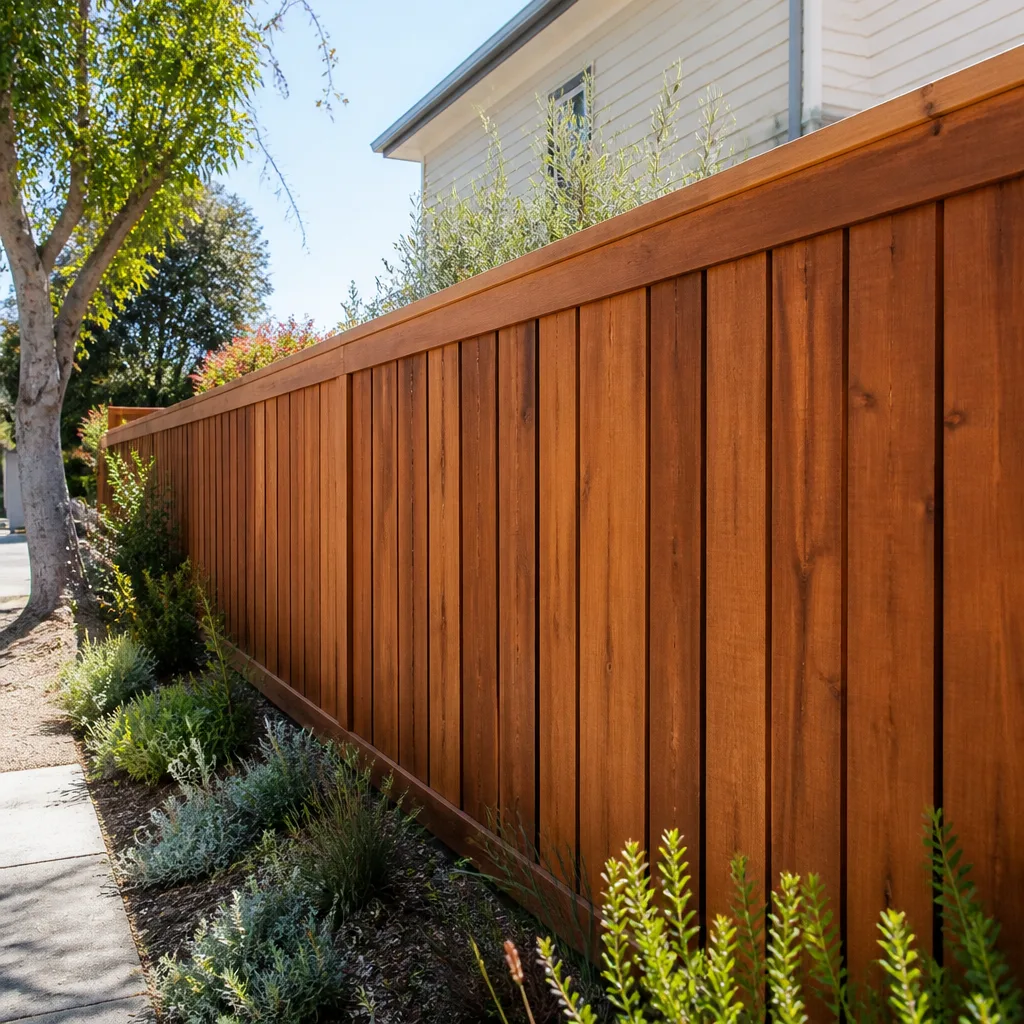
- Fence in disrepair. Leaning posts, missing pickets and faded or peeling finish are the usual triggers. Fence replacement is a common cure, and our fence installation work uses commercial-grade systems from Master Halco, Ameristar and Jerith that hold up under inspection.
- Roof in obvious disrepair. Missing shingles, exposed underlayment and visible fascia damage from the street.
- Driveway damage. Significant cracking, spalling or staining visible from the street.
- Paint and finish failures. Especially on trim and fascia where the finish has broken down.
The cure timeline usually runs on the HOA’s own schedule, but in practical terms most move from violation notice to a cure requirement in weeks, not months. The mistake homeowners make is treating the notice as the emergency, when the notice is actually the last warning after the physical warning signs have been there for years. If you address the underlying sign when you first see it, you usually get to choose the schedule and the contractor instead of racing a deadline.
We handle HOA-related exterior repairs across the seven service lines, which matters because one notice often flags two or three items at once. One contractor, one schedule, one point of accountability.
Windows, Doors, and the Envelope Gaps Around Them
Windows and doors are where most of the envelope warning signs start, because they’re the biggest openings in the wall and the flashings around them are the most common points of water entry. On Lake Forest homes of this era, the window and door openings are also where the stucco crack pattern concentrates.
Warning signs to watch for around windows and doors:
- Draft or water stains at the sill or head. Water staining on the interior jamb, or a sill that shows moisture stains, means the flashing detail around the opening has failed.
- Stucco cracking at the corner. The diagonal crack at a window corner is both a stucco sign and a window opening sign. The two inspections should be done together.
- Condensation between the panes. That’s a failed seal in the glass unit, which means the window has lost its thermal performance.
- Sticking doors and windows that were fine before. A stuck door or window that used to open cleanly can mean the opening has shifted, which points at framing or foundation movement worth checking.
When a window or door needs replacement, the choice of product matters as much as the installation, and we source from a broad bench including PGT, CGI, Therma-Tru and ECO Window Systems. We match product to the performance spec and the budget instead of steering you to one brand by default, because the right window for a Lake Forest home facing the afternoon sun is not necessarily the right window for one facing the morning sun.
How to Tell a Warning Sign From a Cosmetic Blemish
The difference between a blemish and a warning sign is almost always whether the sign is getting worse and whether it has a cause behind it. A surface crack that’s been identical for five years is probably cosmetic. A crack that’s growing, or that has rust staining, or that has a hollow sound behind it, is a warning sign.
Here’s the working method we use when triaging a sign:
- Measure and date it. Take a photo with something for scale and check it again in a few months. Growth is the single best indicator of a structural issue.
- Look for the second sign. A stucco crack alone is one sign. A stucco crack with rust staining below it is a warning. A driveway crack alone is one sign; a driveway crack with a drop on one side and mud pumping up through it is a warning.
- Check the weather correlation. Signs that worsen after rain point to a water path from outside. Signs that worsen on a schedule point at a mechanical cause.
- Sound it out. Tap test on stucco, straightedge test on concrete, visual inspection from ground level on the roof and fascia. None of these is a substitute for a professional inspection, but they help you know which one to ask for.
The signs that are worth scheduling an inspection without waiting to see growth: rust staining below a stucco crack, interior staining that tracks weather, missing or shifted roof tiles, a driveway offset crack wider than a pencil, and any letter from the HOA. Everything else can be monitored, but monitoring only works if you actually recheck the sign on a schedule.
Common Mistakes to Avoid
- Patching stucco without checking the lath. A stucco patch over corroded lath will look fine for a season and then crack again in the same place. The lath and moisture barrier are the actual repair.
- Treating a corner crack as cosmetic. The diagonal crack at a window corner is the classic early sign of the failure pattern that ends in whole-wall delamination. Invest in the inspection early, not the remediation late.
- Filling a driveway crack over a subbase failure. Crack filler over a moving slab just hides the movement. If the two sides of the crack have offset, you’re solving the wrong problem.
- Attributing efflorescence to plumbing. White staining at a baseboard almost always means an exterior water path. Opening the wall to look for a pipe usually wastes the effort and leaves the real leak running.
- Ignoring the HOA letter as a one-off. An HOA violation notice is a snapshot of everything the inspector could see from the street, and it’s usually the second or third sign of the same underlying problem.
- Replacing a roof when the underlayment is the real issue. On a concrete tile roof, the tile can outlive the underlayment by years. A roofing contractor who doesn’t check the underlayment is guessing at the scoped fix.
- Scheduling one trade at a time. When the crack and the roof and the fence all show signs in the same season, they often share a cause. Coordinating one contractor across the work is usually faster and cheaper than three separate schedules.
See the difference
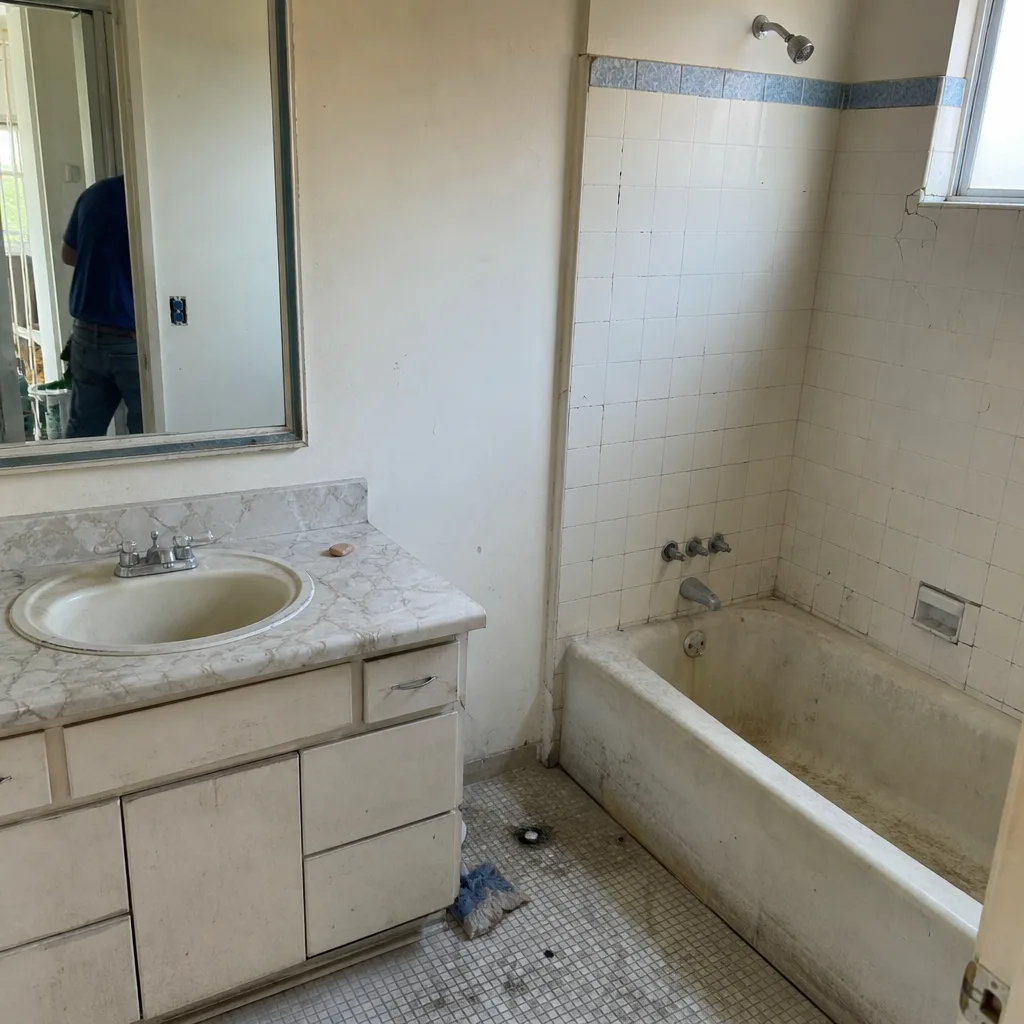 Before
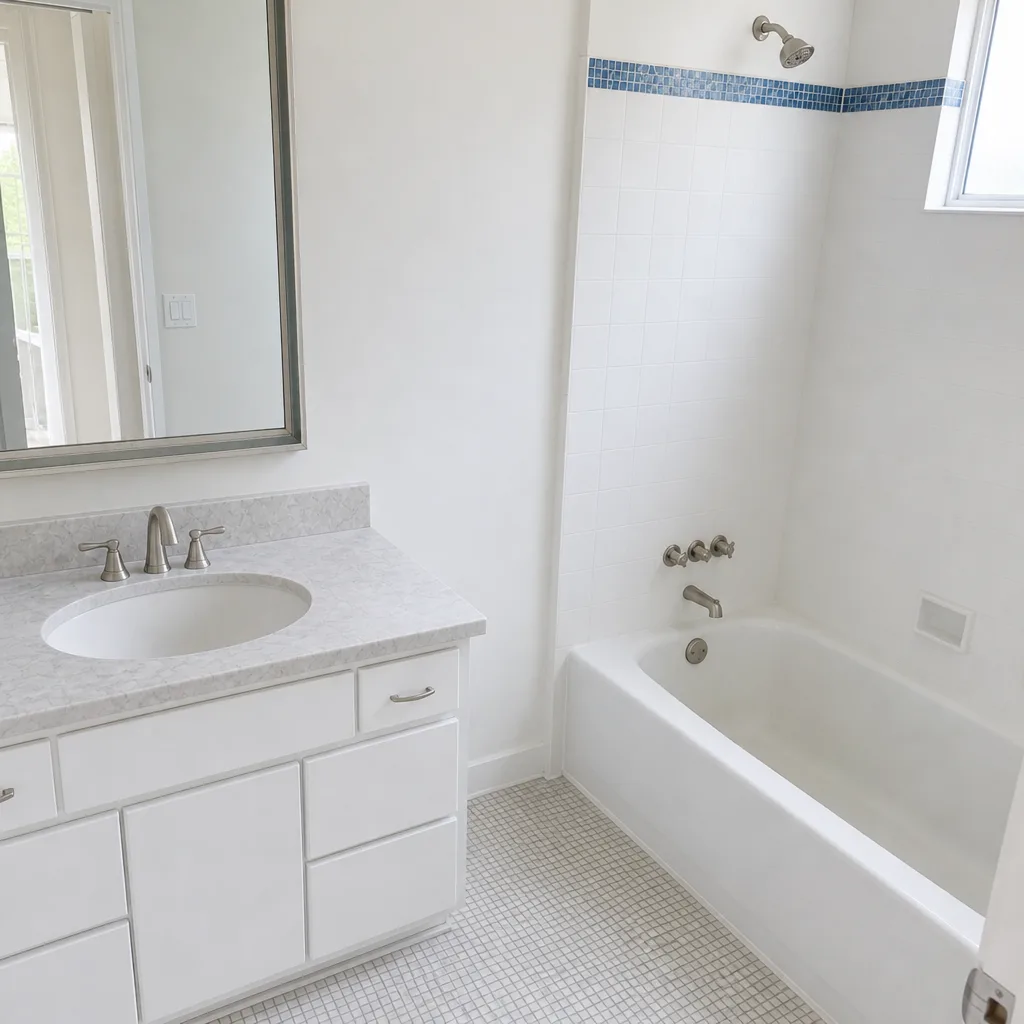 After
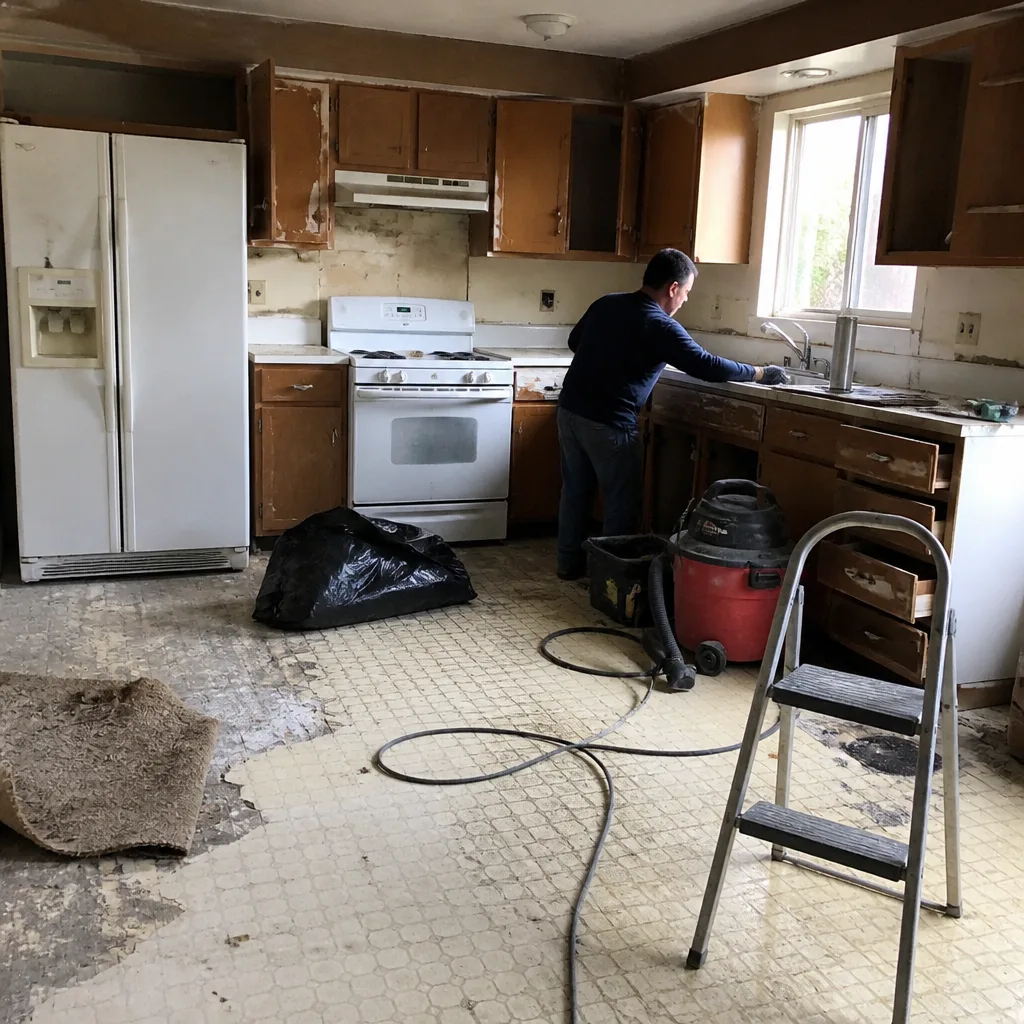 Before
 After
 Before
 After
When to Call a Professional
Call a professional when a sign has a second sign behind it, when it’s growing, or when it’s visible from the street. The specific triggers worth acting on now: rust staining below a stucco crack, hollow-sounding stucco along a wall, an offset crack in the driveway, missing or shifted roof tiles, moisture staining on a ceiling or interior jamb, and any HOA cure notice. Each of those has a short window before the repair scope grows. Each one is worth a free inspection first. Our technicians have up to 8 years of experience across these systems, and we see all seven service lines under one contractor relationship so the diagnosis doesn’t get fragmented across trades. Construction Lake Forest offers free estimates in Lake Forest and the surrounding Orange County area. Call (888) 397-8184. We answer 24/7. Fast dispatch from 7am to 7pm, Sunday through Friday.
Frequently Asked Questions

It usually means the wire lath behind the stucco has begun to corrode, which is the failure stage that precedes widespread delamination. The corner is where the lath is most stressed and most likely to have been cut short during installation. A proper inspection includes a tap test to hear whether the coat has separated from the substrate. Call (888) 397-8184 for a free estimate on the inspection.
A narrow crack that’s stayed level for years is likely shrinkage and can usually be sealed and monitored. A crack that has widened, dropped on one side, or shows fine soil working up through it points to subbase failure. The offset test (running a straightedge across the crack) is the fastest way to tell. Call (888) 397-8184 and we’ll give you an honest read on which side you’re on.
Usually not. White, chalky staining (efflorescence) along a baseboard or at the bottom of a garage wall is a moisture marker that usually means water is entering from outside the wall, not from a pipe inside it. The pattern test is to check whether the staining gets worse after rain compared to a dry stretch. If it tracks the weather, look outside first. Call (888) 397-8184 for a free estimate on the exterior inspection.
Often the tile doesn’t need replacement, the underlayment does. Concrete tile can outlive the underlayment by years, and the warning signs of underlayment failure show up as attic moisture or ceiling staining while the tile still looks fine. An inspection that checks the underlayment is the right first step, not a quote for a full roof. Call (888) 397-8184 for a free estimate.
Stucco cracking and delamination visible from the street, fence in disrepair, roof damage visible from the street, driveway damage, and paint or finish breakdown on trim and fascia. HOA inspections look for visible deterioration, not structural failure, so anything a neighbor can see is fair game for a notice. Call (888) 397-8184 for a free estimate on the repair scope.
Sometimes, but the decision needs to be made on the specific sign, not on the general idea of waiting. Signs without a second sign behind them and without measurable growth can usually be monitored. Signs with rust staining, interior moisture tracking, or a subbase offset should be inspected now, because the repair scope grows faster than the timeline. Call (888) 397-8184 for a free estimate and a straight answer.
The Bottom Line
Lake Forest’s housing stock was largely built with materials that were spec-grade when they went in, and the systems in those homes are now at or past their designed service life. The warning signs are subtle, and they don’t look like emergencies. Diagonal stucco cracks at window corners, offset driveway cracks, granule loss and ridge cap movement on composition roofs, interior efflorescence that tracks the weather, and HOA notices that arrive after the physical signs have been sitting there for years. Triage each sign by growth, by the second sign behind it, and by whether it’s visible from the street. The free estimate from one contractor across all seven service lines is the cheapest way to find out whether you’re looking at a blemish or a warning.
Call (888) 397-8184 for a free estimate. We answer 24/7. Fast dispatch from 7am to 7pm, Sunday through Friday.
Written by the team at Construction Lake Forest.